
How to Make a Viral Video for Affiliate Marketing with a Repeatable System

Introduction
Every entrepreneur dreams of the moment a video goes viral. You imagine millions of views rolling in, affiliate commissions skyrocketing, and your brand name on everyone’s lips.

But here is the truth most people do not want to admit. Most viral success stories are built on luck, not a repeatable plan.
You throw content at the wall, hope something sticks, and then wonder why your results are all over the place. Manual trial-and-error is exhausting. It burns through your budget, eats up your time, and delivers inconsistent affiliate income month after month. Sound familiar?
Here is the good news. A viral video does not have to be a mystery. Research shows that emotional engagement is a primary driver of virality. Content that triggers strong feelings is much more likely to be shared. Understanding the psychology behind why people share is the first step. Studies confirm that social sharing behaviors and emotional triggers work together to push content across platforms.
This article is not about guessing what makes a viral video. It is about a data-backed framework that helps you understand and engineer viral reach on purpose. You will learn exactly what makes a viral video tick and how to use that knowledge to build a scalable affiliate growth system.
Ready to stop relying on luck and start using a proven strategy? Let us look at why viral content spreads in the first place.
1. Understanding the ‘Video Goes Viral’ Phenomenon
Let us clear something up right now. A video goes viral when it spreads far beyond your existing audience through organic sharing. It is not about buying ads. It is not about paid reach. True virality happens when viewers turn into distributors without you asking.

And here is the biggest myth. Most people think a viral video is an overnight success story. You post something at 2 PM, and by dinner time it has a million views. That is almost never the case. In reality, viral videos today often take days or even weeks to build momentum. The algorithm tests content on small groups first. If those groups engage heavily, the platform expands the audience. This is called network effects in action. Each share unlocks a new cluster of viewers, which triggers more shares, and the cycle accelerates.
Another myth is that virality is random. It is not. Social media algorithms now prioritize real search intent and durable attention over shallow likes or follower count. For example, a creator with 500 followers can outrank a creator with 500,000 followers if their video better satisfies what the audience is actually looking for. The TikTok algorithm in 2026 tests content on small cohorts first, expanding only clips that hold viewer attention. This levels the playing field for affiliate marketers who create truly useful content.
So what does this mean for you? It means you no longer need a huge following to get massive reach. You just need to understand how platforms distribute content in 2026. The first viral video in any niche is the one that solves a specific problem better than anything else. If you are in the pet niche, for example, a video showing how to use a product like Fitbark to track your dog’s health could be that video. The key is matching platform signals with real viewer intent.
Ready to go deeper? Let us look at the specific emotional triggers that make people hit that share button.
1.1 The Anatomy of a Viral Video: Key Components
So, what makes a video truly go viral? It is not just luck, you know. Think of it like building a simple toy. It needs a few key parts to work right. For a video to really take off and have a lot of people see it, it needs three main things: a hook, good retention, and a share trigger.
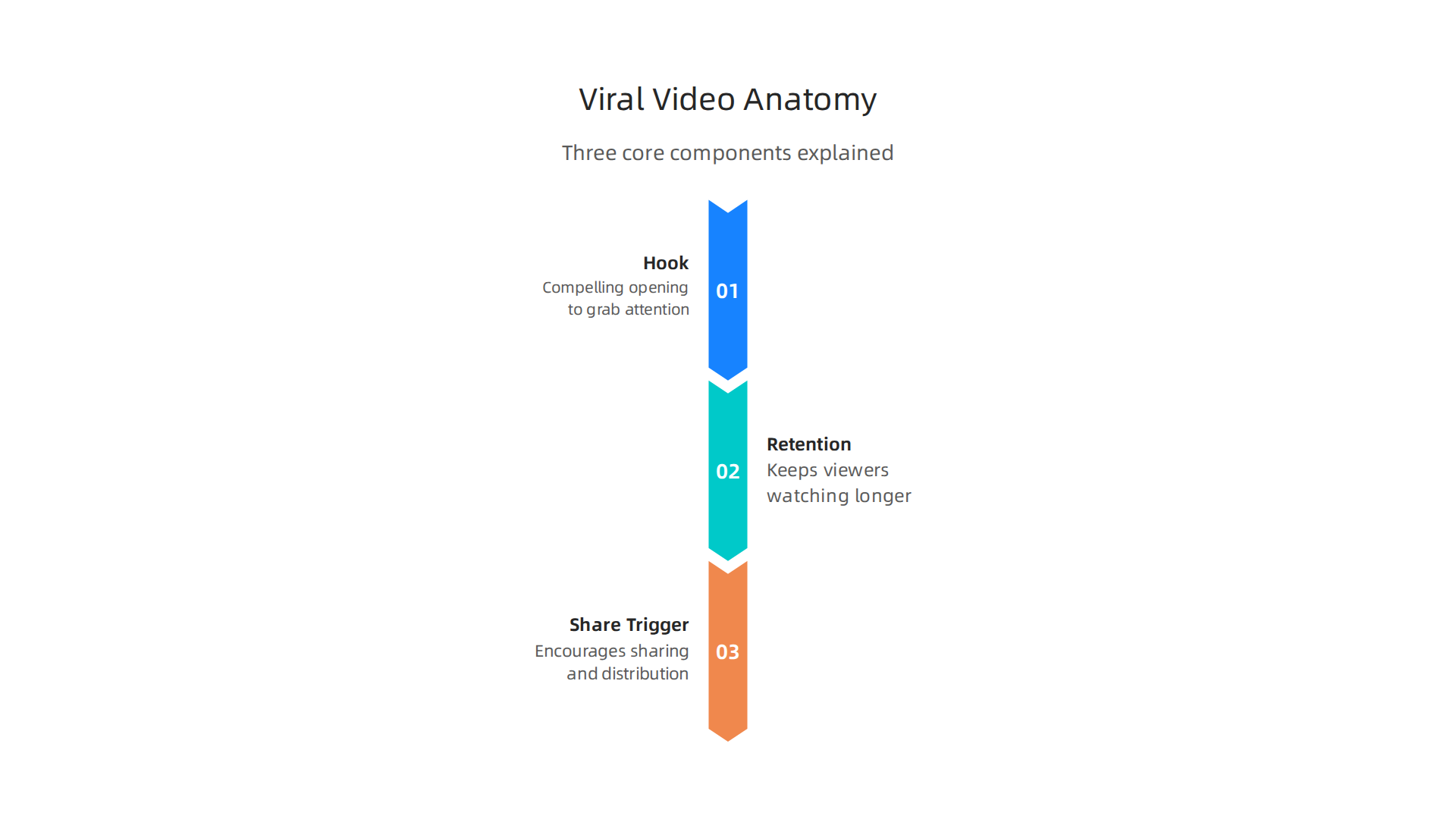
This is the secret recipe for most successful videos today.
First, you need a hook. This is the very first few seconds of your video. It has to grab people’s attention right away. If it does not, they will just swipe past it. Think about it: why should someone stop scrolling for your video? The hook tells them.
Next is retention. This means keeping people watching. The social media apps want people to stay on their platform longer. So, if your video makes people watch for a long time, the app’s computer brain, called an algorithm, thinks, "Hey, this is good stuff!" and shows it to more people. In 2026, algorithms care a lot about how long people watch your video, not just if they click "like" Social media algorithms in 2026: How they rank content. For platforms like TikTok, holding attention for even 8 seconds can be a big deal for getting your content seen How TikTok’s algorithm actually works (2026). If people watch most of your video, it tells the algorithm that your content is valuable and should be shown to a wider audience How the TikTok Algorithm Works in 2026 | Sprout Social.
Finally, a share trigger is what makes someone want to send your video to a friend or post it on their own page. Maybe it made them laugh really hard, taught them something new, or touched their heart. When a video makes people feel something strong, they are more likely to share it. This sharing is how a video goes viral and spreads far beyond your first viewers.
So, if you want your first viral video or any viral video today to reach lots of people, make sure it has a strong hook, keeps viewers watching, and gives them a good reason to share it. For instance, a quick video showing how a product like Fitbark can keep your dog healthy, clearly demonstrating a problem and solution in those first few seconds, and ending with a heartwarming result, could have all three components. You can check out products like this over at Fitbark.
2. The Psychology of Shareability: Why Certain Videos Explode
So, you have a hook. You have a way to keep people watching. But what makes someone actually hit that share button? It is not just about the video itself. It is about what happens inside the person watching. Let us look at the simple reasons why some videos go viral and others do not.
First, think about feelings. Have you ever shared a video because it made you really happy, or really angry? That is the power of emotion. Research shows that content that sparks strong feelings like awe, joy, surprise, or even anger is much more likely to be shared
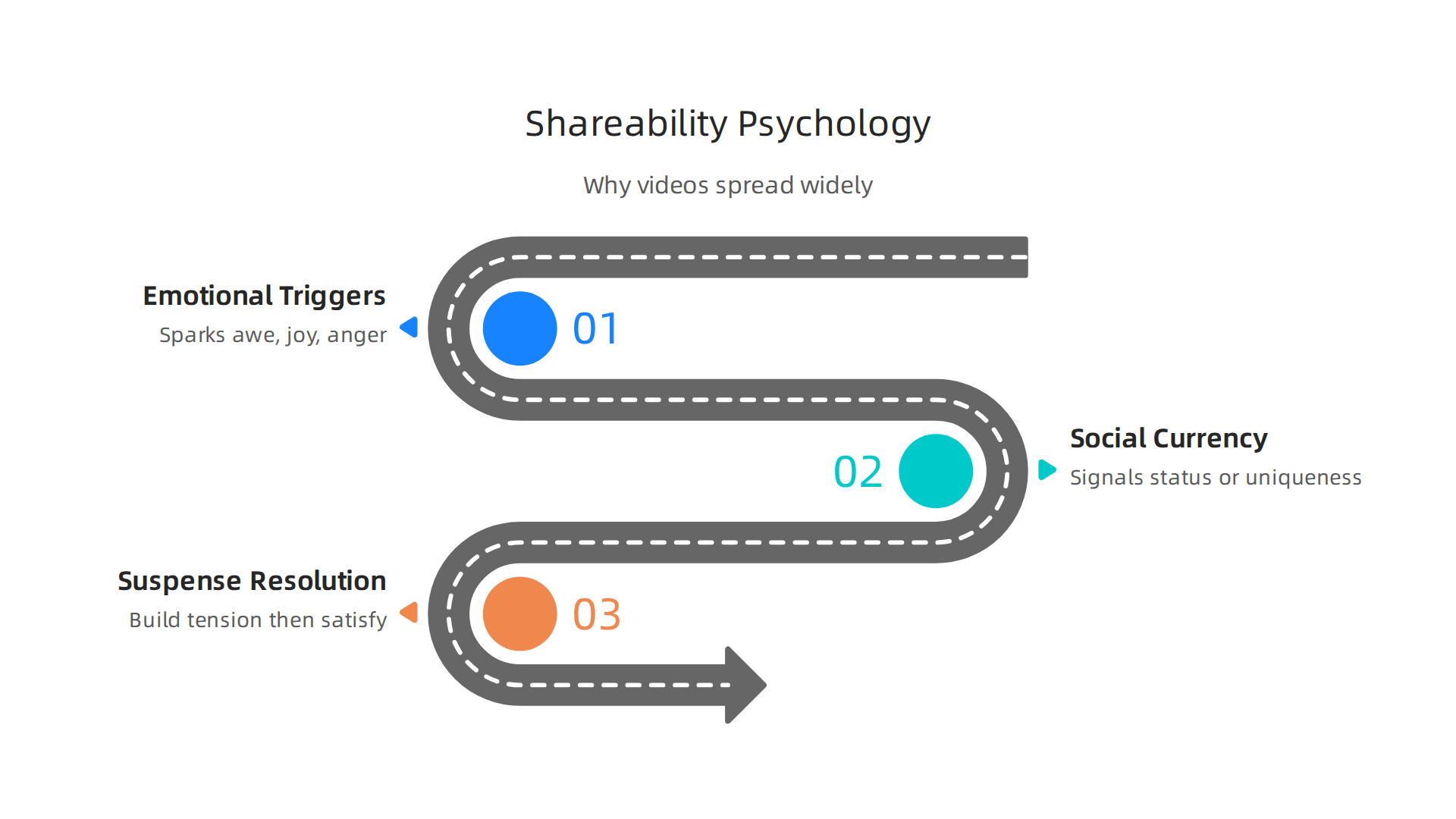

The Psychology Behind Viral Social Media Posts. When you feel something big, your brain wants to tell someone else about it. That is why a video that makes you laugh out loud or shocks you with a twist often gets passed around. The stronger the emotion, the higher the chance your video goes viral.
But there is another reason we share. It makes us look good. This idea is called "social currency." When you share a smart tip, a funny joke, or a cool new product, it says something about you. It shows your friends that you are in the know or that you care about a certain topic. A study on word-of-mouth marketing explains that sharing helps us reinforce our own identity and feel better about ourselves Psychology Behind Word-of-Mouth Marketing in 2026. So if your viral video can give someone bragging rights for sharing it, they will want to hit that button.
Also, our brains love a good story with a little suspense. When a video builds up a question and then gives a satisfying answer, it creates a neurological reward. Your brain gets a small dose of feel-good chemicals when the suspense resolves Social Media Influences Consumer Behavior. That is the "aha!" moment. It feels so good that you want to share that feeling with others.
So what does this mean for you? If you want to create a video that explodes, use emotional triggers. Make your audience feel joy, surprise, or awe. Give them social currency, like a tip that makes them look smart. And add a tiny story that builds a little suspense before giving a payoff.
For example, consider a product like Fitbark. A video showing a worried pet owner checking their dog’s health, then a happy surprise when the data shows everything is fine. That mix of suspense, relief, and joy is a perfect recipe for sharing. And the feeling of being a caring pet owner gives the viewer a reason to share it with other dog lovers. This is how you turn a simple video into a viral video today.
2.1 Applying Psychology to Affiliate Content
Now that you know what makes a video go viral, let us put that into action with affiliate products. The trick is to weave your product demo into a story that triggers emotion. Do not just list features. That kills shareability. Instead, create a moment of suspense or joy.
Take an unboxing video, for example. You open the package and act excited. Then you add a surprise twist. Maybe you test the product and find something unexpected. That is the “aha” moment your audience craves. According to real case studies, successful affiliate marketers often use emotional storytelling to boost conversions 25 Affiliate Marketing Case Studies.
Here is a specific example. Imagine you are unboxing a Fitbark for your dog. The camera focuses on your pup. You open the box and show the tracker. Then you reveal the surprise: the device caught that your dog was actually anxious during storms, something you never noticed. That mix of suspense and relief makes people want to share the video. It gives them social currency too. They look like a caring pet owner who found a smart solution.
Avoid overt selling. Do not say “buy this now” every few seconds. Let the emotional moment speak for itself. When you build a small story around a product, your video feels genuine. That is what makes a viral video today. And it leads to more clicks and shares without feeling like an ad.
3. Platform Algorithms in 2026: What Drives Viral Distribution
You have learned how to wrap your product in an emotional story. That is half the battle. The other half? Getting the algorithm on your side. In 2026, if you want your video goes viral, you need to understand how each platform decides what to show. The good news is these systems are smarter than ever. But they are also predictable.
Let us start with TikTok. The algorithm in 2026 cares about something called "durable attention." That means it watches how long people stay glued to your clip. Simple likes and quick taps matter less now. Instead, the platform tests your video on small groups first. If those people watch until the very end and maybe rewatch a part, the algorithm pushes your video to a bigger audience How TikTok’s Algorithm Works in 2026 and 15 Tactics to Go Viral.
Instagram Reels and YouTube Shorts work in a similar way. They both look at the "watch time to share" ratio. A video that keeps eyes on the screen and gets shared is more likely to appear on feeds. So what makes a viral video in 2026? It is not about flashy edits. It is about holding attention longer than anything else in the feed.
Here is something surprising. In 2026, algorithms use AI to recommend content based on search intent Social media algorithms in 2026: How they rank content.

That means your title, your captions, and even the words you say out loud help the system understand your video. A creator with 500 followers can rank above a creator with 500,000 followers if their video better matches what people search for TikTok SEO: Complete 2026 Guide to Ranking on TikTok Search.
So how do you use this? You reverse-engineer the algorithm with your own analytics. Pull up your best performing clips. Check which ones have the highest watch time and the best share rates. Study the hooks and captions that worked. Then do more of that. Viral videos today are not random luck. They are built on data.
If you want to test this yourself, try filming a short product demo using the Fitbark as your subject. Keep it under 60 seconds. Use captions with searchable phrases like "dog anxiety tracker." Then check your analytics to see which clips kept viewers watching. That is how you turn a simple unboxing into a video that the algorithm pushes to thousands of new people.
3.1 Platform-Specific Playbooks for Entrepreneurs
Each platform in 2026 has its own playbook for how a video goes viral. On TikTok, you need trending sounds and duet potential. Jumping on a popular audio track signals the algorithm that your content is relevant How the TikTok Algorithm Works in 2026 | Sprout Social. Duetting with a trending video can also give you a quick boost. Posting daily gives the algorithm more chances to test your content on small groups and expand it if it holds attention.
For YouTube, SEO metadata in your titles and descriptions helps your video rank in search. Playlist nesting keeps viewers watching longer, which is a key ranking signal Social media algorithms in 2026: How they rank content. Community posts help you stay connected with subscribers and drive traffic to your latest uploads.
For Instagram Reels, carousel-style storytelling encourages shares. Optimizing for share-to-feed means creating content people want to send to friends, which extends your reach naturally How Social Media Algorithms Work in 2026: Full Guide.
What makes a viral video in 2026? Viral videos today need the right platform tactics plus durable attention. To test this, grab a product like the Fitbark and create a video for each platform. On TikTok, add a trending sound. On YouTube, optimize the title. On Instagram, make a shareable Reel. Then check which platform pushes your viral video to the widest audience.
4. Content Structure and Storytelling Techniques for Virality
You might think a video goes viral by pure luck. But in 2026, viral videos today follow a clear structure. When you understand what makes a viral video, you can build it on purpose. The secret lies in three storytelling techniques that keep viewers watching.
The classic story arc: problem, tension, resolution.
This is the oldest trick in the book, and it still works. Start by showing a problem your audience has. Then build tension by not fixing it right away. Finally, reveal the resolution. For example, if you are reviewing a pet product like Fitbark, you could show a dog looking anxious at the vet. Tension rises as the dog paces. Then you show how the product solves the problem by tracking the dog’s activity. This simple arc matches what the best short-form videos do: they say more in 15 seconds than a blog says in 1500 words Mastering the Art of Short-Form Video Storytelling on Social Platforms. Story beats need to be precise in short video Story Beats: Structure for Short-form Videos.
Looping hooks (open loops) to increase retention.
An open loop is a statement that creates curiosity. You say something like “I almost quit until I found this one trick.” The viewer needs to know what that trick is. They stay to close the loop. For short-form videos, a completion rate above 70% is excellent Video completion rate: What it is & how to calculate it. Open loops help you hit that number. Do not close the loop too fast. Leave small gaps in the story so the viewer feels compelled to watch until the end.
Pattern interrupts and unexpected transitions.
When a video feels predictable, people scroll away. A pattern interrupt is a sudden change in sound, movement, or scene. It jolts the brain back to attention. For instance, you could be talking calmly and then cut to a loud sound effect. Or you could switch from a close-up to a wide shot in a snap. These unexpected transitions make a viral video feel fresh and exciting. The science of storytelling says you should lead with a human face and build emotional connection in the first three seconds The Short-Form Video Storytelling Playbook. That connection keeps people from scrolling.
When you put these three techniques together, you create a video that hooks viewers, holds them, and leaves them satisfied. That is what makes a viral video in 2026.
5. Timing, Trends, and Cultural Resonance: When Videos Take Off
You have a great video. The story arc is solid. The hook is tight. But you post it on a Tuesday afternoon in July. Nothing happens.
Why? Because timing is just as important as the video itself. If you want a viral video in 2026, you need to think about the calendar and the cultural moment.
Seasonal spikes and event-driven virality.
People search for different things at different times of the year. A video about New Year’s resolutions works best in early January. A video about back-to-school routines peaks in August.
You can use this to your advantage. Let us say you are an affiliate for a product like Fitbark, which tracks a dog’s activity and health. You could create a video in January called "Help Your Dog Keep Their New Year’s Fitness Goals." The demand is already there. You just ride the wave.
Plan your content around these predictable moments. They give you a head start.
Real-time trend monitoring tools.
Not every trend is predictable. Some come out of nowhere. A new song, a funny sound bite, or a news event can create an opportunity overnight.
How do you catch these trends? You need the right tools. In 2026, smart creators use social monitoring tools to spot rising topics early. Platforms like Brandwatch help you track what people are talking about in real time
Sprout Social’s insights on social media monitoring tools. Others use TrendWatching to understand shifting consumer behavior TrendWatching consumer trends and insights. These tools tell you what is heating up so you can act fast.
Balance trends with brand consistency.
Here is the tricky part. You cannot jump on every trend. If you do, your audience will get confused. They will not know what you stand for.
The smart move is to filter trends through your brand’s lens. Ask yourself: Does this trend fit my story? If you run a site about pet health, a goofy dance trend might feel forced. But a trend about "emotional support animals" fits perfectly.
You stay true to your brand. You get the boost from the trend. This balance builds trust.
A video goes viral once. But a trusted brand creates value for years. By planning for seasonal spikes and using trend monitoring tools wisely, you set yourself up for real, lasting growth.
6. Measuring Viral Success: Metrics That Matter
So you got a million views. Does that mean your video went viral? Not really. Views are nice to see, but they do not tell the whole story. If you want to know if a video truly succeeded in 2026, you have to look past the vanity numbers.
Look at shares, not just views.
A viral video spreads because people share it. In fact, social videos are shared 1200% more than text and images combined, according to recent data. That makes share rate a much better sign of real impact. Amplification rate is similar. It measures how many people hit the share button versus just watching. If a lot of people share your video, you are winning.
Watch the conversion rate.
This is the metric that actually pays the bills. A video can get tons of views but zero sales. For affiliate marketers, conversion rate is everything. How many viewers clicked your link and bought something? If you are promoting a product like Fitbark, which tracks your dog’s health, you need to know if those views turned into purchases. Use a simple link to track that Fitbark affiliate link. Attribution models help you see which video drove the sale, even if the viewer did not buy right away.
Set realistic mini-viral benchmarks.
Not every video will break the internet. In 2026, a "mini-viral" hit is totally valuable. For example, TikTok engagement rates average around 3.7% to 4.9% depending on your niche. If your video gets 10,000 views and a 4% engagement rate, that is a win. YouTube clickthrough rates of 4% to 5% are solid, while 6% to 8% is great. Compare your numbers to these industry benchmarks to see if your video is performing well. Do not chase millions. Chase meaningful engagement that leads to sales. That is what makes a viral video actually useful for your business.
7. Leveraging Viral Videos for Affiliate Marketing Growth
You now know which metrics matter for a viral video. But how do you turn that attention into actual affiliate sales? You need a system that works on autopilot.
Build an automated repurposing system.
One viral video should not live on just one platform. In 2026, smart creators take a single video and chop it up for TikTok, Instagram Reels, YouTube Shorts, and even Pinterest. You can use simple tools to schedule these posts. As one expert explains in this TikTok affiliate strategy guide, platforms like TikTok Shop now let you earn commissions directly from short clips. So repurpose your viral content quickly and link your products each time.
Focus on evergreen viral content for passive income.
A video that stays relevant for months or years is pure gold. Think about product reviews, how to guides, or funny pet compilations that people search for again and again. These videos keep driving traffic to your affiliate links long after you post them. The global affiliate marketing market is projected to be worth $42.6 billion in 2026, and a big chunk comes from content that keeps working. Learn to Make Money with Affiliate Marketing in 2026 shows how to build these passive income streams. If your viral video is about a product like a dog health tracker, that video can earn commissions for years.
Integrate affiliate calls to action without hurting shareability.
Here is the tricky part. You need to ask for the sale without making the video feel like an ad. The best way is to place your affiliate link in the description or pinned comment. Use a simple tool like Bitly or the link structure from programs like Fitbark. For example, if your video is about keeping your dog active, you can say "I use this tracker to monitor my pup’s steps" and then drop your Fitbark link. This way the video stays entertaining and shareable. People click because they trust you, not because you shouted at them.
Forget the hard sell.
Focus on building a system that works while you sleep. That is how viral videos turn into real affiliate growth.
Conclusion: Building a Repeatable Viral Strategy
Here is the truth about what makes a viral video. It is not luck. It is not magic. A viral video is actually the result of a repeatable system. This system is built on human psychology, data, and consistent testing.
You have seen the research throughout this guide. Emotional triggers are a primary driver of sharing behavior. When content makes you feel something strong, you share it. That is the engine behind every viral video. The psychology of viral videos today is well studied. You now know the blueprint.
So where do you start? Do not try to do everything at once.
Step one: Pick one platform. Master it.
Step two: Apply the structure we covered. Focus on the first three seconds. Use a hook that triggers an emotion. A study on social sharing behaviors confirms that content creating a strong emotional reaction gets shared more often. That is the core of what makes a viral video.
Step three: Test and measure every single time. You do not need to go viral overnight. You just need to build a system that gives you a better chance each time.
Want a practical example? Imagine you are in the pet niche. Your first viral video could be a simple, helpful review of a product. You show the product working naturally. You place your affiliate link in the description or pinned comment. That is a repeatable system. If you are looking for a product to start with, a dog activity tracker like Fitbark is a perfect example of a niche product that solves a real problem for pet owners.
Stop hoping for a video goes viral moment. Start building the system that creates one. Your next video is your first test. Go make it.
Summary
This article explains a repeatable, data-backed system for creating viral videos—especially useful for affiliate marketers who want reliable reach instead of random luck. It covers what virality actually is, the three core components of viral clips (hook, retention, share trigger), and the psychological drivers that make people share content. You’ll learn platform-specific tactics for TikTok, Instagram Reels and YouTube Shorts, storytelling structures that increase watch time, and how to time or ride trends. The guide also shows which metrics matter (shares, watch time, conversions) and how to repurpose viral clips to generate passive affiliate income. By the end you’ll know how to test, measure, and scale short-form video that attracts real viewers and converts them into buyers.
Related Articles